


In a science fiction novel, Robert Forward described exotic life forms based on nuclear interactions, which could exist in high energy environments such as neutron stars. In another science fiction novel, Fred Hoyle described a living, superintelligent and extremely powerful cloud of gas and plasma. Robert Freitas and Clément Vidal speculate that even more exotic life based on gravitational fields, the fabric of apparently empty space, could exist around or inside black holes. I mentioned these and other pictures of very strange aliens in my books.
I suspect that really advanced aliens could be superintelligent balls of quantum fields or whatever sub-quantum weirdness comes underneath quantum fields. If so, there’s no good mental picture of them that we can form at this moment. But there are mental pictures of strange aliens that are much closer to home in the sense that they are based on more or less understood physics - and perhaps, as we’ll see, also much closer to home in a literal sense.
Perhaps the stars are living entities. Perhaps plasmas are intelligent beings. Perhaps there are superintelligent cosmic clouds of plasma near the Earth, which could be related to all sorts of paranormal phenomena.
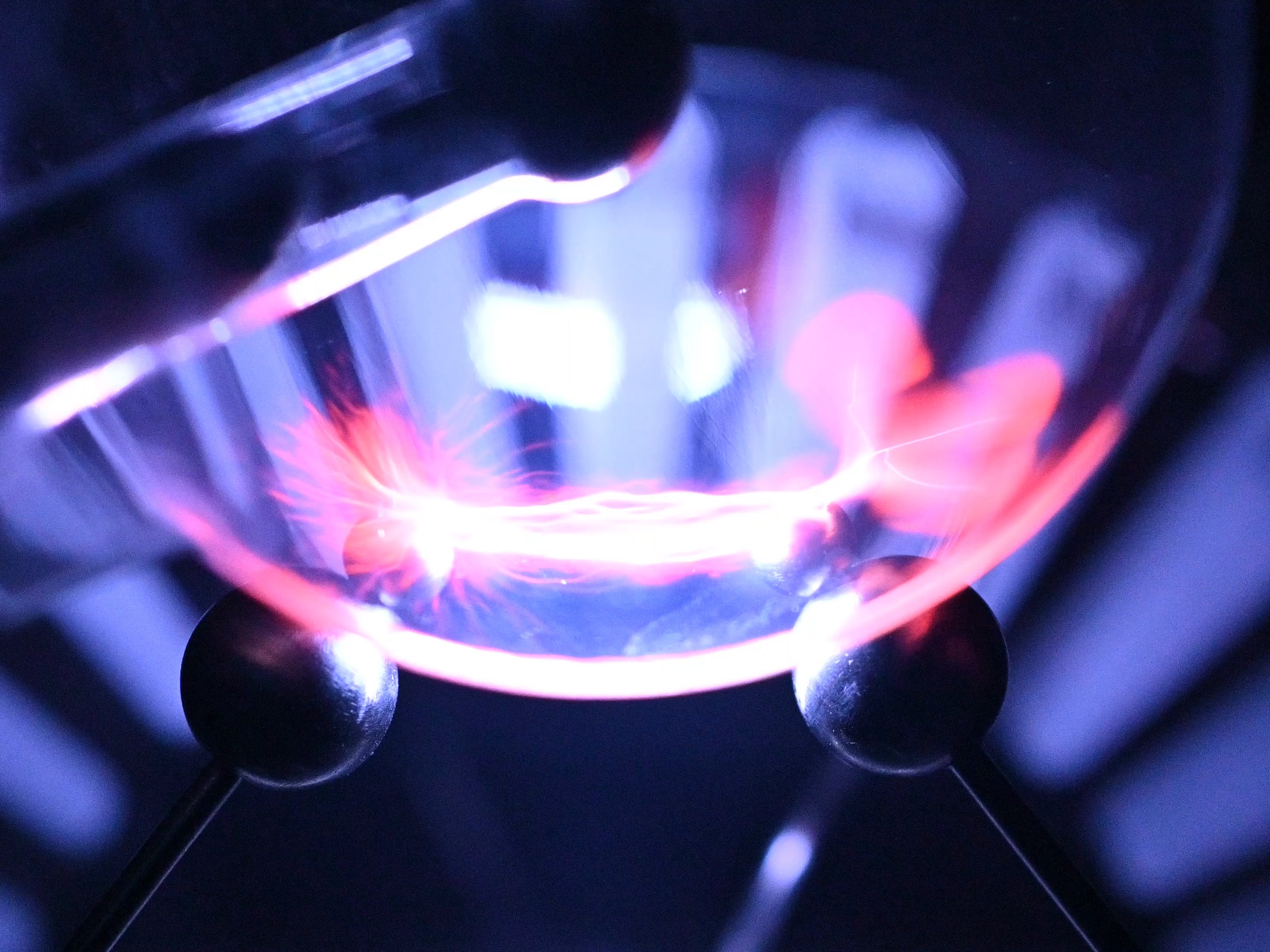

In “A New Science of Heaven” (2022), Robert Temple argues that plasmas can be said to be “living, intelligent and conscious.” There are good reasons to believe, he says, that “plasma, with its ordering properties, can in certain circumstances be in some sense alive and can evolve intelligence.”
Plasmas are ionized, electromagnetically active matter. Typical plasmas are gaseous and much more tenuous than “regular” matter. Plasma “is the most common state of matter in the Universe - it accounts for more than 95% of the matter visible to us in stars, planets, and exoplanets” (source).
Olaf Stapledon imagined creatures of plasma that live and thrive in the sun and other stars. In a science fiction short story titled “Out of the Sun,” Arthur Clarke took us to an observatory on Mercury where an astronomer observes the Sun. A plasma creature, just like those imagined by Stapledon, is ejected from the Sun and comes to crash on the “cold” surface of Mercury.
“For what is life but organised energy?,” Clarke says. “Does it matter what form that energy takes - whether it is chemical, as we know it on Earth, or purely electrical, as it seemed to be here? Only the pattern is important; the substance itself is of no significance. But at the time I did not think of this; I was conscious only of a vast and overwhelming wonder as I watched this creature of the sun live out the final moments of its existence. Was it intelligent?”
Perhaps, Temple argues, some plasma beings are superintelligent and God-like.
I felt the need to double check if the many scientists quoted by Temple really said the things that he attributes to them. It turns out that, as far as I can tell, yes they did. Four plasma physics researchers often quoted by Temple also dropped sober but suggestive hints in a textbook: some phenomena in complex plasmas “resemble those of biological systems.” The question of “a different type of ‘life’ formed by self-organized complex plasma structures arises naturally,” they say. “Some aspects of ‘memory’ in complex plasma helical structures are indeed possible. The competition and evolution processes of complex plasma’s self-organized structures is a possible topic for future investigations.”
The authors of the textbook, and Temple, focus on dusty plasmas with lots of embedded solid micro-particles (dust) that “range in sizes from sub-nanometer to several hundred micrometer scales.” Dusty plasmas can be complex plasmas with collective emergent and autopoietic behaviours. We speak of autopoiesis when a physical system can maintain and reproduce itself.
Plasma research seems entirely based on understood and therefore not sexy enough mainstream physics. But looks can be deceiving, and there are many mysterious phenomena in plasmas, especially when it comes to quantum effects and the interactions of plasmas with the geometry of spacetime on the one hand, and biology on the other hand. If you want to read a great science fiction novel on the mysterious physics of the plasma universe, read “Ball Lightning” by Cixin Liu. Ball lightning is thought to be a plasma phenomenon, a coherent structure of plasma called a plasmoid.
Temple tells us that there are two large clouds of plasma, known as Kordylewski clouds, located at the Lagrange Points L4 and L5 of the Earth–Moon system. Temple suggests that the clouds could be conscious cosmic beings much more intelligent and powerful than us.
“The storage capacity for information would easily include the ability to retain full knowledge of everything that has ever happened in our local cosmic environment for four billion years,” reads one of the most suggestive passages. “The presiding consciousnesses… of the two clouds will have personalities so alien from our own that we cannot conceive of them.”
We might have gigantic intelligent clouds on our doorstep, “which are billions of times more intelligent than any little green man could ever be.”
The clouds could be monitoring the Earth and us and sending down “plasmic drones” for reconnaissance, too tenuous to be detected. Ball lightning phenomena could be reconnaissance drones of this sort. In general, this could be a good explanation for UFO/UAP sightings.
Temple goes to great lengths to show that many of the religious stories and reports of paranormal phenomena that have been with us for centuries can be reinterpreted in the light of his ideas. He considers the possibility that the deities and spiritual beings that have reportedly communicated with people could be plasma beings. If you have seen or even communicated with otherworldly entities, perhaps they were plasma beings.
Temple also delves into the fascinating topic of biophotonics and bioplasmas. We could have plasma bodies parallel to our physical bodies. Our plasma bodies could be responsible for many unexplained occult phenomena and for the auras around us that some people claim to be able to see. Our plasma bodies could survive the death of our physical bodies and keep some version of our consciousness around in a cloud of intelligent plasma. This is a nice concept of the afterlife.
Or, I wish to add, our plasma “soul” could be recorded by plasmic drones at the moment of death and taken to the Kordylewski clouds. This is a nice concept of heaven. “Everyone who has ever lived will be recorded,” says Temple. “Every creature that has ever roamed the surface of the Earth will be recorded. Every plant which has ever grown will be as well.”
My favorite quote from Temple’s book: “When someone shouts ‘crazy’ at you, put your fingers in your ears and carry on.”
In another intriguing book titled “Starlight Starbright: Are Stars Conscious?” (2021), Greg Matloff suggests that stars, or at least those stars that meet certain conditions, could be conscious beings. The idea is found in Olaf Stapledon science fiction masterpiece “Star Maker” and has been explored by other science fiction writers.
Matloff prefers not to speculate about the level of stellar consciousness, which may be “at the level of a classical god or no higher than that of a slime mold amoeba,” he says.
Like Temple’s book, Matloff’s book is packed with frontier science and visions from the best science fiction.
Both books are page turners and a pleasure to read, full of new concepts and connections to interesting science and spiritual traditions. Do I “believe” what they say? Let me answer like this: I believe some of these ideas are very interesting and could spark new, important insights in science and spirituality. Therefore, I don’t dismiss them and I’m waiting for time to tell.
I personally align with Temple and believe the "primordial intelligence soup" or otherworldy beings are some kind of plasma, and that the plasma can take on other forms. For example, the Nordic "ultraterrestrials" that people talk about is likely plasma that is "shapeshifting" into a Nordic.